Context
Habitats.ai emerged from Mach49's Portfolio T venture studio, where I partnered with technical co-founders to deliver a financially sustainable, nature-positive portfolio from a blank slate.
Global biodiversity loss threatens ecosystem stability, yet conservation efforts lack real-time monitoring tools. Traditional field methods are expensive, slow, and limited in scope. We uncovered an opportunity to combine remote sensing (bioacoustics, satellite & flown instruments, and more) with machine learning to give conservationists and land users actionable data at scale: an “operating system for nature".
My Role
As co-founder and CX Principal, I led customer development, product strategy, and go-to-market positioning. My work spanned:
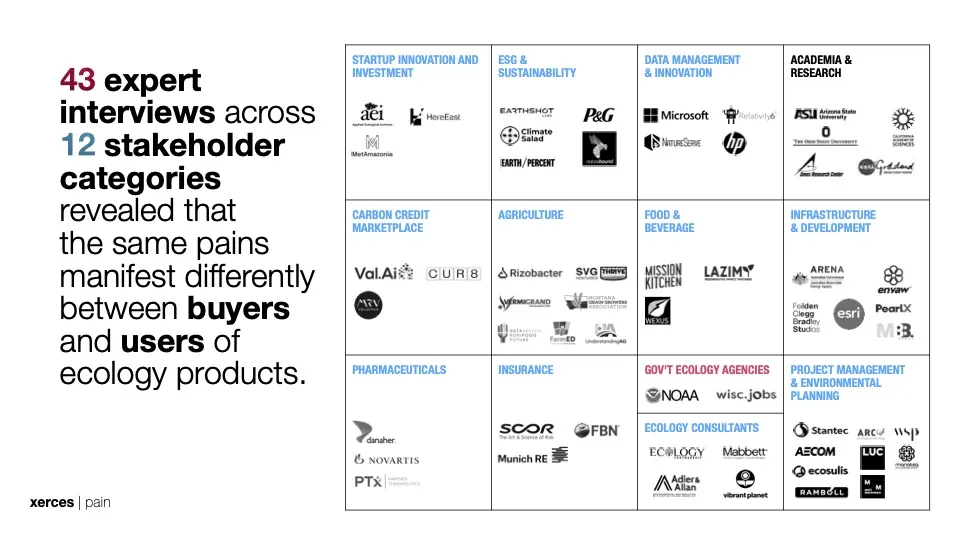
- Customer discovery with 40+ conservation experts across three continents
- Product definition and roadmap prioritization
- Ecosystem partnership development with hardware manufacturers
- Pitch deck development (yielding undisclosed 7-figure seed funding)
- Prototyping & usability testing
Approach
Customer-First Discovery
We spent months in conversation & discovery with field researchers, conservation NGOs, and government agency workers surveying the broad landscape of value creation centered around nature.
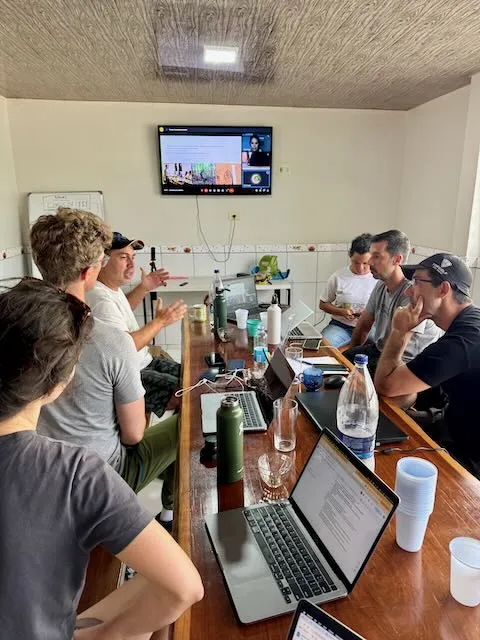
I conducted structured interviews, rode along on field ecology assessments, and mapped existing workflows to understand where our technology could create genuine value.
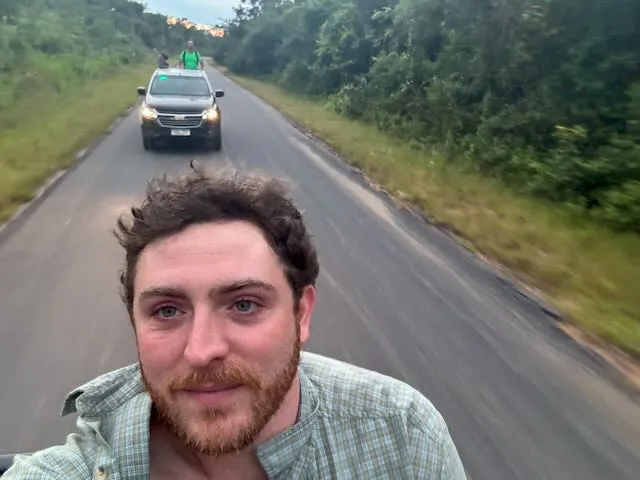
A “quick” trip to the Brazilian Amazon—just 24 hours of commercial flights, 1 chartered prop plane, a bumpy ride in the back of a pickup truck, and a boat ride into a community of indigenous land stewards—revealed many of the real-world challenges for hardware in the world's most biodiverse ecosystems. Deployment, moisture, battery life, data/memory card retrieval, and more presented as significant challenges.
Rapid Prototyping
Back home, we quickly began work on an MVP that visualized species interconnections from a partner ecologist's existing field reports. Leveraging GBIF data, this interactive view of species identified from a single site showed the complexity of “everyday” landscapes, not only biodiversity hotspots like the Amazon.
It also revealed the power of a few confirmed species observations to predict the presence/absence of interrelated species. By sampling just 10% of the confirmed observations, we accurately predicted 86% of the total species found to be present onsite in a traditional ecologist-led environmental assessment.
Data Liquidity
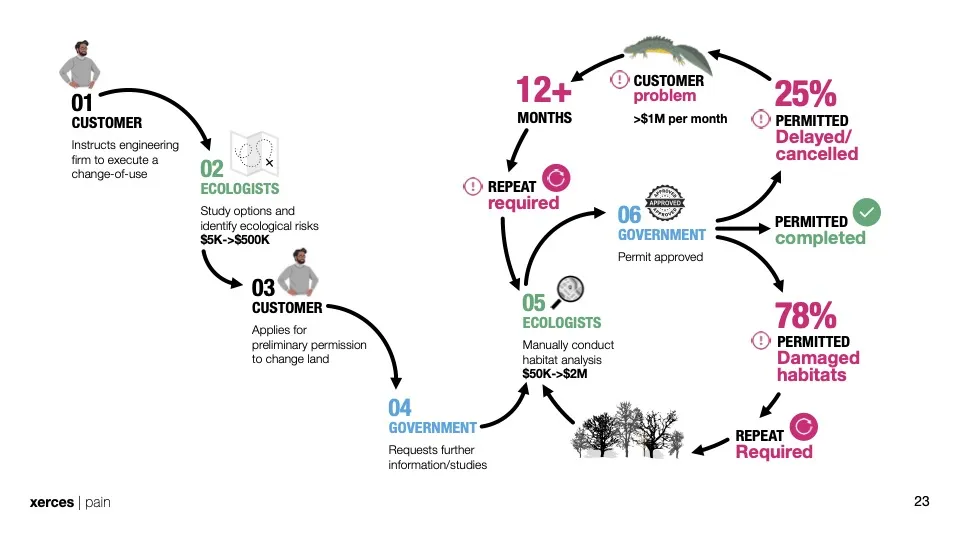
A core learning from our time with experts, both remote and in the field, was that troves of ecological data are illiquid: siloed and inaccessible for shared benefit. When a private contractor completes a field assessment, results are locked away—sometimes in literal filing cabinets or hard drives—inaccessible to the broader community or even a project just down the road. Local councils keep many records, but they're often paper records with no digital interfact. On the other hand, academic knowledge of species interactions, habitat requirements, and more require specialized study, methodology, and access limited to a small pool of professional ecologists. Too small a pool, in fact, to meet market needs for surveys, assessments, and permitting applications that slow or prevent project progress when land use changes.
Strategic Positioning
Conservation technology is crowded with solutions. I positioned Habitats.ai not as another monitoring technology, but as the comprehensive "OS for nature". By integrating cutting-edge sensing technology, field ecological assessments, and amazing existing conservation databases like GBIF and the IUCN Red List, we unlocked a predictive view of nature's interconnectedness that customers had never seen before.
What We Built
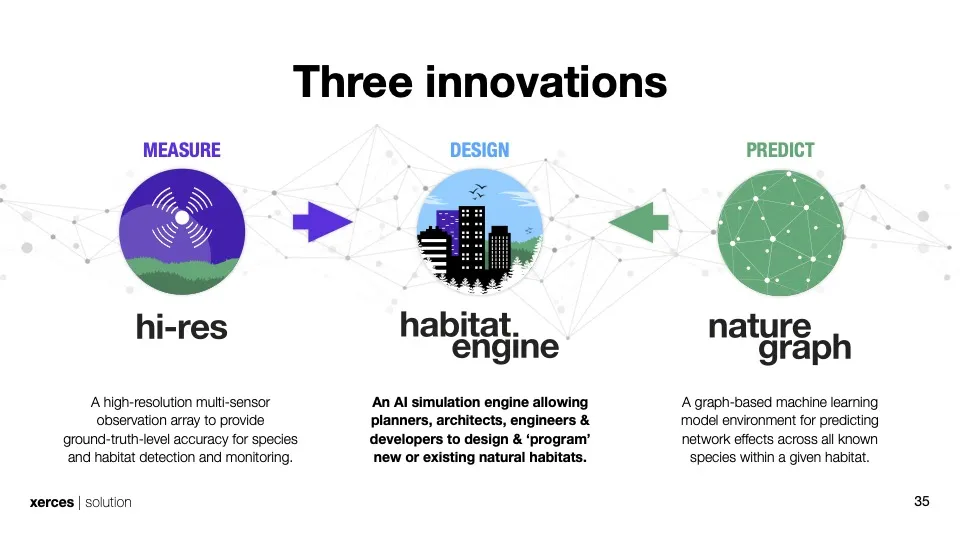
Impact
- Nature Reserve Pilot: Before the studio closure (December 2024), I initiated a pilot with the largest nature reserve in the Middle East, focused on identifying new species and supporting the rewilding of 1,100+ animals across 6 species.
- Partnership Development: Evaluated and launched pilot engagements with major conservation organizations in Brazil and Saudi Arabia.
- Technical Validation: Tested and refined MVP product scope — predicting 86% of species presence from 10% of traditional observations.
- Fundraising: Led development of pitch materials yielding 7-figure seed funding approval.
- Market Learning: Generated insights that informed product roadmap for 12+ months.
The nature reserve pilot — connecting AI-powered sensing to real conservation outcomes at landscape scale — represents the clearest expression of where my skills, interests, and values converge. The venture taught me how to balance technical ambition with market reality, and reinforced that successful climate tech requires deep domain expertise combined with rigorous customer development.
What I Learned
Building in the conservation space requires patience. Budget cycles are long, procurement processes are complex, and stakeholders are (rightfully) cautious about unproven technology. Success requires building trust through demonstrable wins, not lofty promises.
One must also know when to pivot vs. when to persist. We evaluated countless go-to-market strategies based on expert and customer feedback, and ultimately found a defensible entry point into a complex business ecosystem, as well as a growth path forward. Just like a species fighting for its ecological niche, this venture required adaptability and evolution.
Although the studio's closure was an extinction event for this venture, I came away with more understanding of how to translate user needs into solutions that deliver shared value, protecting nature as we meet human needs.